Why Your Windows Keep Leaking: What Novi Homeowners Should Know About Caulking, Flashing, and Exterior Trim
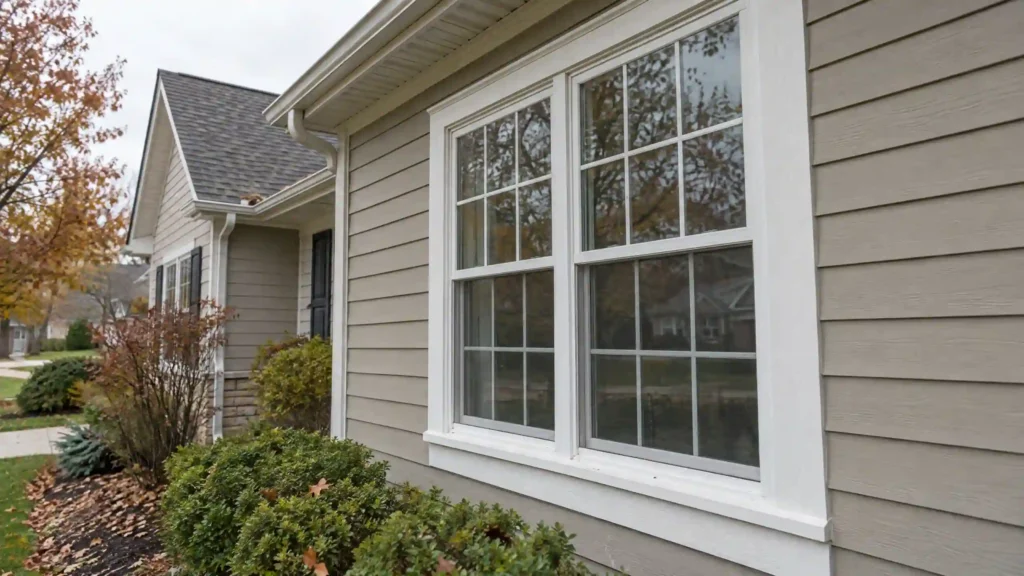
Have you ever noticed a small water stain beneath a window after a heavy rainstorm? Maybe the paint near the window frame is starting to peel, or the exterior trim looks a little worse every time you inspect it.
It’s tempting to assume the solution is simple: add some caulk, touch up the paint, and move on.
Sometimes, that is enough. Other times, the visible damage is only a small part of a bigger problem.
Windows and exterior doors are openings in your home’s protective exterior. If water cannot drain away properly or the surrounding materials have deteriorated, moisture can find its way into places where it doesn’t belong.
For homeowners in Novi, Michigan, understanding the difference between a failing seal and a more serious water intrusion problem can help prevent unnecessary repairs and make it easier to decide what needs attention.
Let’s look at what causes these problems, what you can check yourself, and when a repair needs a closer inspection.
Why Water Gets In Around Windows
A window does more than let natural light into a room. It also has to work as part of the home’s exterior weather barrier.
The window itself, its frame, the surrounding trim, the sealant, and the flashing all play different roles in managing water.
The U.S. Department of Energy’s Building Science Education resources explain that properly installed flashing helps direct water away from window and door openings instead of allowing it to enter the wall cavity.
When one part of that system fails, the results may not be immediately obvious.
Water might enter behind exterior trim, travel along part of the wall, and eventually appear indoors some distance from the original opening.
That is why the location of a water stain doesn’t always identify the exact source of a leak.
Before reaching for a caulking gun, it helps to understand what you’re looking at.
1. Cracked or Missing Caulk
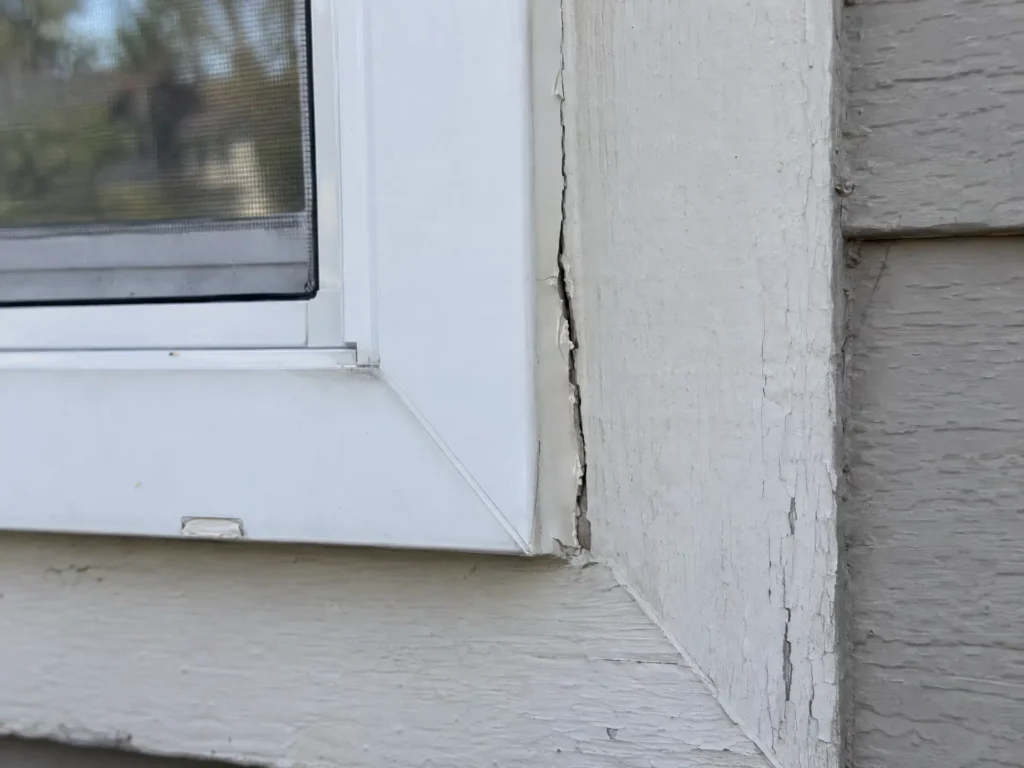
Caulk is often the first thing homeowners notice when inspecting windows and doors.
Over time, exterior sealant can crack, separate from adjoining surfaces, or deteriorate through exposure to weather and temperature changes.
Look for gaps around the outside of window frames, door frames, and trim joints. Pay attention to areas where the sealant has pulled away or developed visible cracks.
However, not every gap should simply be filled with caulk.
Different parts of a window assembly have different purposes. Some joints are intended to be sealed, while other areas need to remain open to allow water to drain.
Sealing the wrong opening can trap moisture instead of solving the problem.
If the damaged seal is clearly between stationary exterior trim and an appropriate adjoining surface, replacing deteriorated sealant may be a reasonable maintenance task. If you are unsure what the gap does, investigate before covering it.
2. Damaged or Deteriorating Exterior Trim
Exterior trim frames windows and doors, but it also faces repeated exposure to rain, sunlight, humidity, and temperature changes.
Paint may begin to peel. Wood can soften or split. Joints can open up, and previously tight connections may become vulnerable to water.
Look particularly closely at lower corners and horizontal surfaces where water may collect.
If the trim is simply weathered, cleaning, preparation, and repainting may be sufficient.
If the material has become soft, crumbly, swollen, or visibly deteriorated, painting over it will not restore its condition.
The important question is whether the material is still sound and whether water is reaching it repeatedly.
A lasting repair addresses both the damaged material and the reason it became damaged.
3. Water Stains Beneath Windows
A brown stain below a window is worth investigating, even if the area feels dry today.
The stain might result from an old leak, condensation, or water entering through another part of the wall. Its appearance alone cannot establish the cause.
Start by noticing when the problem appears.
Does the stain become darker after wind-driven rain? Does it occur during cold weather when condensation is more likely? Is the paint bubbling, or does the drywall feel soft?
These details can help narrow down the possibilities.
You can photograph the affected area and compare its appearance over time. If the stain grows, the material deteriorates, or the area becomes damp again, arrange a closer inspection.
Avoid repainting or patching damaged drywall until the source of the moisture has been identified and addressed.
Otherwise, the same stain may return after the next heavy rain.
4. Windows That Feel Drafty
Not every window problem involves water.
If you feel cold air around a window on a windy day, the cause could be worn weatherstripping, a poorly fitting sash, gaps around the frame, or air leakage elsewhere in the wall.
The U.S. Department of Energy distinguishes between weatherstripping, which is generally used around moving components, and caulk, which is commonly used to seal stationary joints.
That distinction matters.
A window that opens and closes should still operate properly after maintenance. Applying sealant indiscriminately can interfere with its movement or cover a problem that needs a different repair.
Check that the window closes fully and that its locks engage. Look for visibly damaged weatherstripping and gaps around the surrounding trim.
If the draft persists, the problem may extend beyond the visible seal.
5. Peeling Paint and Soft Wood
Peeling paint around a window is easy to dismiss as a cosmetic issue.
Sometimes it is simply old paint reaching the end of its useful life. In other cases, repeated moisture exposure may be contributing to the deterioration.
Look for paint that bubbles, flakes, or separates from the surface. Check whether nearby wood appears swollen, cracked, or unusually soft.
Do not assume that every peeling area indicates a leak. Paint can fail for several reasons, including poor surface preparation and normal weathering.
However, when peeling paint appears alongside water stains, deteriorated trim, or recurring dampness, the combination deserves attention.
The goal is to determine whether the problem is limited to the finish or whether the underlying material also needs repair.
6. Water Coming In During Wind-Driven Rain
Some leaks only appear under particular weather conditions.
A window may remain completely dry during light rain but leak when strong winds push rain against the side of the house.
This can make the problem frustrating to track down.
Potential causes include deteriorated seals, defective or improperly integrated flashing, damaged exterior materials, and other openings that allow water behind the wall’s protective layers.
The leak may also originate above or beside the window rather than directly at the frame.
Take note of the weather conditions when the leak occurs. Record which room is affected and whether the water appears near the top, bottom, or sides of the opening.
Do not spray water into gaps or dismantle the window assembly to test it yourself. A professional inspection is a safer way to investigate a recurring leak when the source is not obvious.
Why the Right Repair Matters
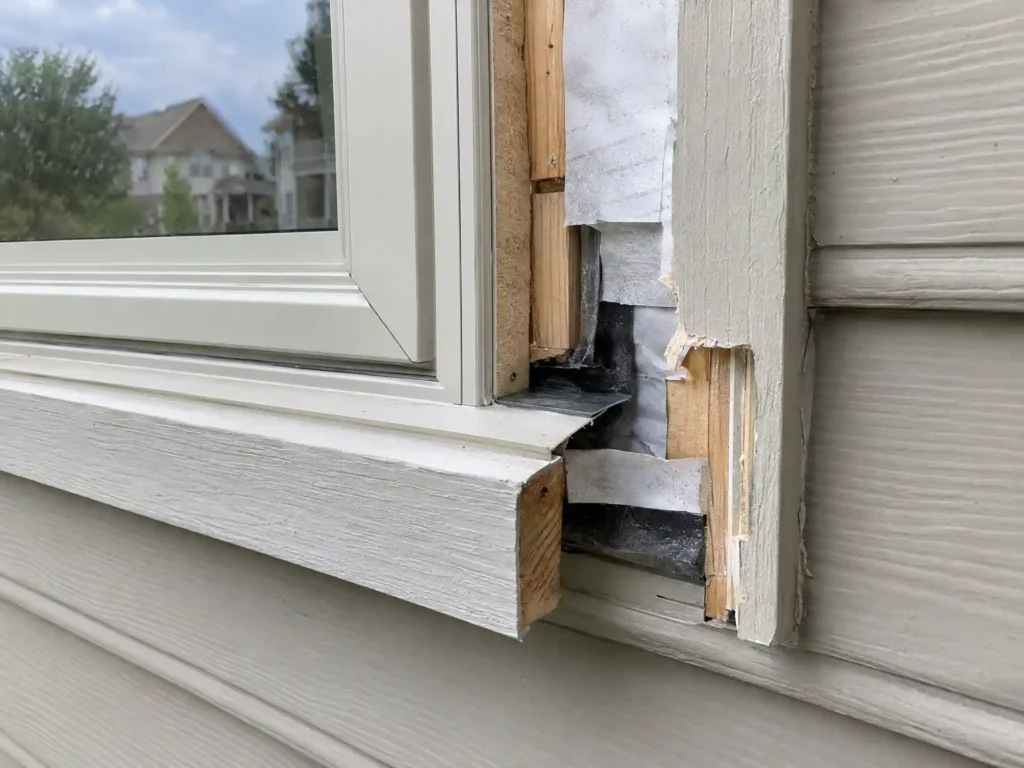
The easiest repair is not always the right repair.
Adding a fresh bead of caulk may help when a sealant joint has failed. It will not fix deteriorated wood, defective flashing, or water entering through another part of the exterior wall.
The U.S. Department of Energy’s Building Science Education resources explain that window and door openings need properly integrated flashing to direct water out of the wall system.
That means a repair should be based on the actual cause of the problem, not just the most visible symptom.
For homeowners in Novi and throughout Metro Detroit, identifying that cause early can help avoid repeated patching and give the repaired area a better chance of lasting.
Can You Repair a Window Leak Yourself?
Sometimes, yes. The important thing is knowing what kind of problem you’re dealing with.
If the issue is limited to visibly deteriorated sealant around a stationary exterior joint, replacing it may be a manageable maintenance task for someone comfortable with basic home repairs.
However, a recurring leak, damaged framing, or suspected flashing failure is a different situation.
Before deciding what to do, consider these three scenarios.
When a DIY repair may be reasonable
You may be able to handle the work yourself if:
The damaged sealant is easy to reach safely.
The joint is clearly intended to be sealed.
The surrounding trim and materials are still sound.
There are no signs of ongoing water intrusion.
The window or door continues to operate correctly.
Use a sealant suitable for the materials and exposure conditions, and follow the manufacturer’s application instructions.
Prepare the surface properly rather than applying new sealant over loose, dirty, or deteriorated material.
Most importantly, don’t seal drainage openings or weep holes designed to let water escape.
When it’s better to call a professional
Consider a professional inspection if you notice:
Water entering repeatedly during rain.
Soft or deteriorated wood around the opening.
Bubbling paint or damaged drywall.
Visible damage to the window frame.
Suspected flashing problems.
A leak that appears to originate above the window.
Persistent moisture with no obvious source.
These problems may require more than surface maintenance.
A qualified professional can investigate the affected area, identify the likely source, and determine whether the repair involves sealant, trim, flashing, surrounding exterior materials, or the window itself.
Does a Leaking Window Always Need Replacing?
No. A leaking window does not automatically mean you need a new one.
The right solution depends on the condition of the window and the surrounding wall assembly.
For example, a sound window with deteriorated exterior sealant may need a relatively straightforward repair. A window with damaged framing or a failed installation detail may require more extensive work.
Replacement becomes worth considering when the window itself is deteriorated, no longer operates properly, has persistent performance problems, or would cost disproportionately more to repair than to replace.
Before making that decision, establish where the water is entering.
Replacing a window without addressing a separate drainage or flashing problem may leave the underlying issue unresolved.
The same principle applies to exterior doors. If water appears around the doorway, inspect the threshold, surrounding trim, seals, and drainage details rather than assuming the door itself is necessarily at fault.
Why You Shouldn't Ignore Moisture Inside the Wall
One of the more frustrating things about exterior leaks is that the visible damage can be smaller than the underlying problem.
Water entering behind exterior trim may affect materials that you cannot see without further investigation.
Repeated moisture exposure can contribute to material deterioration and conditions that support fungal growth.
That doesn’t mean every water stain indicates widespread damage. It does mean that recurring leaks deserve more attention than a quick cosmetic repair.
If an area smells musty, remains damp, or shows repeated staining, investigate the moisture source before repairing the interior finish.
Avoid closing up wet materials behind new trim, drywall, or paint.
A proper repair should address the water entry, allow affected materials to dry appropriately, and replace damaged components where necessary.
Why Michigan Weather Makes Exterior Maintenance Important
Homes in Novi and the wider Metro Detroit area experience changing weather throughout the year.
Rain, humidity, temperature swings, freezing conditions, and snow all place demands on exterior materials.
When water gets into a small opening, colder weather can make an existing problem more complicated. Materials may expand, contract, or deteriorate, while icy conditions can make exterior inspections and repairs more difficult.
That is why it makes sense to investigate suspicious window and door areas before winter whenever possible.
You don’t need to inspect every inch of your home after every storm. However, recurring water stains, damaged trim, and visibly failed seals shouldn’t be left indefinitely.
If you’ve noticed a problem already, take the opportunity to find out what’s causing it.
Don't Forget the Rest of the Exterior
Windows and doors are only part of your home’s protective exterior.
If you find water damage in one area, take a look at the surrounding surfaces too.
Check for:
Loose or damaged siding.
Cracked exterior caulking.
Peeling paint around trim.
Damaged gutters or downspouts.
Water collecting near the foundation.
Cracked masonry around openings.
Roof or flashing concerns above the affected area.
These issues are not necessarily connected, but checking nearby components can help you understand whether the problem is isolated or part of a broader maintenance concern.
For example, water staining beneath an upstairs window might be related to the window itself, but it could also warrant checking the roofline and exterior wall above it.
The goal is to fix the cause rather than repeatedly treating the same visible damage.
Exterior Window and Door Repairs in Novi, MI
For homeowners in Novi, exterior maintenance often involves several small jobs rather than one major renovation.
Perhaps a section of trim needs attention, a door frame has deteriorated, or several exterior areas need inspection before winter.
Other properties may require more extensive repairs involving siding, roofing, painting, or general exterior improvements.
ABC 123 maintenance provides home and property maintenance services in Novi and the surrounding Metro Detroit area, including exterior home repairs, painting and drywall, roofing maintenance, remodeling, and renovation work.
If you’re dealing with a recurring leak or damaged exterior materials, start by identifying the problem and determining what work is actually needed.
You can explore the company’s available services here:
ABC 123 Maintenance— Home and Property Maintenance Services
The objective is simple: address the problem properly, protect the surrounding materials, and avoid spending money on repeated temporary fixes.
Frequently Asked Questions
Why does my window leak only when it rains heavily?
Wind-driven rain can reach areas that remain dry during lighter rainfall. Damaged sealant, defective flashing, deteriorated exterior materials, or openings above the window may allow water to enter. A professional inspection can help identify the source.
Can I fix a leaking window with caulk?
Sometimes. Caulk may help if a suitable exterior sealant joint has deteriorated and the surrounding materials are sound. However, it will not correct every leak, particularly when flashing, framing, or drainage is involved. Avoid sealing designed drainage openings.
How do I know if water damage around a window is serious?
Warning signs include recurring water stains, soft wood, bubbling paint, deteriorating trim, damp drywall, and musty odors. These signs do not establish the extent of the damage, but they warrant further investigation.
Should I replace my windows before winter?
Not necessarily. First determine whether the issue is with the window, the sealant, the flashing, or the surrounding exterior materials. A repair may be sufficient if the window and frame remain in good condition.
How often should exterior caulking be checked?
Inspect exterior sealant periodically and whenever you notice drafts, gaps, or signs of water intrusion. Its service life depends on the material, installation, exposure, and joint movement, so there is no single replacement interval that applies to every home.
Can a leaking window cause mold?
Persistent moisture can create conditions that support mold growth. A leak does not automatically mean mold is present, but water intrusion should be addressed promptly and damp materials should be assessed appropriately.
When should Novi homeowners inspect exterior windows and doors?
Spring and fall are practical times to inspect exterior openings. You should also investigate promptly if you notice a leak, draft, damaged trim, or other signs of deterioration after a storm.
A Small Leak Is Worth Investigating
A cracked bead of caulk may be a simple maintenance issue. A recurring water stain may point to something more complicated.
The challenge is knowing which situation you’re dealing with.
Start by looking at the surrounding materials, noting when the problem occurs, and checking whether the damage is getting worse. If the source isn’t obvious, avoid covering it up before the underlying issue has been investigated.
For homeowners in Novi and across Metro Detroit, paying attention to these small warning signs can help protect the home and make exterior maintenance more manageable.
If your windows, doors, trim, or other exterior areas need attention, ABC123 Fix can help you explore the repair and maintenance work your property requires.
The best repair isn’t always the biggest one. It’s the one that addresses the actual problem.