

12 Fall Home Maintenance Tasks to Complete Before a Michigan Winter
Fall in Novi has a way of sneaking up on you.
One week, you’re still enjoying mild afternoons and spending time outside. Then suddenly, the leaves are everywhere, the mornings are colder, and winter doesn’t seem quite so far away.
That change of season is also a good reminder that your home is about to deal with months of freezing temperatures, snow, ice, wind, and repeated freeze-and-thaw cycles.
A little preparation now can make a big difference later.
Michigan emergency-preparedness guidance recommends getting homes ready before severe winter weather arrives, including maintaining heating equipment, weatherproofing doors and windows, protecting water lines, and keeping gutters clear.
For homeowners in Novi and throughout Metro Detroit, fall is one of the best times to walk around the property and deal with the small problems that are much easier to fix before winter.
Here are 12 areas worth checking.
1. Walk Around the Exterior of Your Home
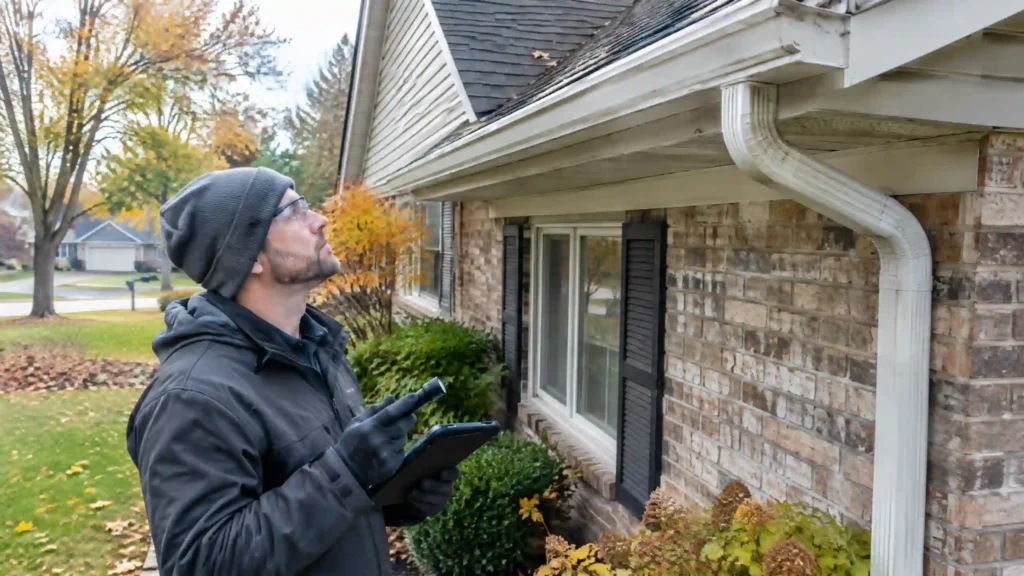
Start with something simple: walk around the entire house.
Don’t just look at the front. Check the sides, back, garage, foundation, and areas around doors and windows.
Look for things that changed during the summer:
- Cracked or loose siding
- Damaged trim
- Peeling paint
- Gaps around windows and doors
- Damaged exterior caulking
- Loose railings or steps
- Cracks in masonry
- Areas where water appears to collect
- Damaged vents or exterior fixtures
You don’t necessarily need to repair every cosmetic imperfection before winter.
The important thing is to identify problems that allow water or cold air into the home or that could become worse when temperatures drop.
A small opening around a window, for example, may not seem important in September. Once winter arrives, that same opening can contribute to drafts and moisture problems.
2. Check the Roof Before Snow Arrives
Your roof is one of the first parts of the house to take the full force of winter weather.
From the ground, look for missing, damaged, or visibly displaced shingles. Check for damaged flashing around roof penetrations, chimneys, and other areas where water could potentially enter.
You don’t need to climb onto the roof to perform a basic fall inspection.
In fact, if you see something concerning from the ground, it’s often better to have the roof inspected safely rather than turning a maintenance task into a fall hazard.
Michigan’s winter-preparation guidance specifically recommends repairing roof leaks and checking whether the roof can handle additional snow and ice loads.
If you’ve already noticed a leak during a heavy summer rainstorm, don’t assume it will somehow disappear over winter.
It is much easier to address a roof problem while the weather is still reasonably cooperative.
3. Clean the Gutters and Check the Downspouts
This is one of those jobs that is easy to postpone.
It’s also one of the jobs you don’t want to forget.
By late fall, gutters can be packed with leaves, twigs, and other debris. When water cannot move freely through the gutter system, it can contribute to drainage problems and increase the potential for ice-related issues once temperatures fall.
Michigan specifically recommends cleaning gutters and downspouts before winter.
Don’t stop at removing the leaves.
Check where the downspouts discharge water.
Water should be directed away from the home’s foundation rather than collecting directly beside it.
If a gutter is sagging, pulling away from the fascia, or leaking at a joint, fall is a good time to address it.
And if you’re uncomfortable working from a ladder, this is a task worth leaving to someone equipped to do it safely.
4. Look for Early Signs of Ice-Dam Problems
Ice dams are a winter problem, but some of the preparation happens in fall.
Michigan guidance explains that ice dams can form when snow melts on warmer sections of a roof and then refreezes near colder roof edges. Water can subsequently back up beneath roofing materials and cause interior damage.
That means fall is a good time to look at the conditions that can contribute to the problem.
Start with:
- Clean gutters
- Clear downspouts
- Adequate attic insulation
- Proper attic ventilation
- Any known roof leaks
- Areas where warm air may be escaping into the attic
If you’ve experienced significant ice buildup or interior water stains around the roofline in previous winters, don’t simply wait to see whether it happens again.
The goal is to identify the underlying issue before snow and ice make the situation harder to address.
5. Protect Your Plumbing From Freezing Temperatures
Few winter problems are more disruptive than a frozen or burst pipe.
Michigan’s guidance recommends insulating vulnerable pipes, particularly those in areas such as crawl spaces and attics, sealing air leaks around pipes, and disconnecting garden hoses before winter.
Before temperatures really drop, walk through areas where plumbing may be exposed to cold air.
Pay particular attention to:
- Unheated garages
- Crawl spaces
- Basements
- Attics
- Pipes along exterior walls
- Outdoor faucets
- Areas with noticeable drafts
Disconnect garden hoses and make sure outdoor faucets are properly prepared for winter.
It’s also worth knowing where your home’s main water shutoff is located.
You don’t want to be searching for it for the first time while water is running across the basement floor.
If a pipe does freeze, Michigan specifically warns against using an open flame to thaw it.
6. Give Your Heating System Attention Before You Need It
The worst time to discover that your heating system has a problem is during the first genuinely cold night of the season.
Fall is the opportunity to get ahead of that situation.
Michigan recommends maintaining heating equipment and having fuel-burning equipment properly vented and kept clear. The Michigan State Police also recommends professional inspection of gas or oil furnaces and replacing the air filter.
At a minimum, homeowners should make sure:
- The system is operating normally
- The filter is clean and appropriate for the system
- Vents and registers aren’t blocked
- Exterior exhaust vents are clear
- Unusual noises or smells are investigated
- Any recurring heating problem is addressed
If your furnace struggled last winter, made unusual noises, cycled excessively, or failed to heat certain areas of the home properly, don’t wait until January to investigate.
A heating system doesn’t have to stop working completely for there to be a problem worth addressing.
7. Inspect Doors and Windows for Drafts
You can often find some of the most obvious winter-preparation opportunities without any special equipment.
Stand near exterior doors and windows on a cool or windy day.
Can you feel air coming through?
Check weatherstripping, caulking, door sweeps, and visible gaps around frames.
Michigan recommends weatherproofing homes with measures such as weather-stripping, caulking, and insulation around walls, doors, and windows.
This isn’t just about comfort.
Keeping unwanted cold air outside can also help your home retain heat more effectively during the winter.
If the caulking is cracked, separated, or missing in places where it should be sealing an opening, fall is a much better time to fix it than a freezing January afternoon.
8. Take a Close Look at Decks, Porches, and Steps
Outdoor structures don’t get a break just because you’re using them less often.
Summer rain, humidity, sunlight, foot traffic, and temperature changes can all leave their mark on decks, porches, stairs, and railings.
Look for:
- Loose boards
- Rotting or deteriorated wood
- Loose railings
- Damaged stairs
- Unstable posts
- Protruding fasteners
- Cracked concrete steps
- Areas where water remains after rain
Don’t overlook the structure simply because the surface still looks good.
If something feels loose or unstable when you use it, investigate it before winter adds snow and ice to the equation.
This is particularly important around entrances and steps where winter conditions can make an existing problem much more difficult to deal with safely.
9. Check Concrete, Brick, and Drainage Areas
Walkways, patios, driveways, retaining areas, and other masonry surfaces deserve a quick inspection before freezing weather arrives.
Look for cracks, loose sections, uneven areas, and places where water repeatedly collects.
You don’t have to assume that every crack will become a major problem.
Instead, think about the bigger picture.
Is water getting into an area where it shouldn’t?
Is a section becoming unstable?
Has an existing crack noticeably changed?
Does water drain away from the house or toward it?
Fall is a good time to address drainage and masonry concerns because you still have an opportunity to make repairs before snow and ice complicate access.
10. Trim Problematic Tree Branches
Take a look at the trees around your home and outdoor structures.
Are there dead or damaged branches hanging over the roof?
Are branches close to power lines?
Could a large limb potentially fall onto a garage, gazebo, deck, or other structure?
Michigan’s winter-preparation materials specifically recommend cutting away tree branches that could fall onto a house or neighboring structure.
You don’t need to turn fall maintenance into a major landscaping project.
The goal is simply to identify obvious hazards before heavy snow and ice add weight to already vulnerable branches.
For large trees or branches near utility lines, use an appropriately qualified professional rather than attempting the work yourself.
11. Don't Forget the Garage and Other Exterior Structures
The house gets most of the attention, but winter affects everything on the property.
Check your:
- Garage
- Shed
- Gazebo
- Detached structures
- Fencing
- Outdoor storage areas
Look for roof problems, loose panels, damaged doors, deteriorated wood, drainage issues, and anything that could become unstable in strong wind or heavy snow.
A gazebo, for example, may look perfectly fine from a distance while having loose connections, deteriorated posts, or roof problems that become much more noticeable after a winter storm.
If you already know something needs repair, fall is a much better time to address it.
12. Look at the Property as a Whole
Finally, take a step back.
Instead of thinking about individual repairs, ask a bigger question:
If the first major snowstorm arrived next week, what would worry me most about this property?
Maybe it’s the gutter that keeps overflowing.
Maybe it’s the drafty back door.
Maybe it’s the deck railing that has started to move.
Maybe it’s the roof leak you noticed during a summer storm.
Or maybe it’s the old outdoor structure that has been on your “I’ll get to it eventually” list for two years.
Those are the projects worth prioritizing.
You don’t need to complete every home improvement project before winter.
You do want to know which problems could become more expensive, more difficult, or less safe once the weather turns.
Why Fall Is Such a Good Time for Home Repairs
There is a practical reason to tackle these jobs in September and October.
Winter makes many exterior repairs harder.
Snow can cover problems. Frozen ground can complicate access. Ice can make outdoor work dangerous. And once a small problem becomes an emergency, you’re dealing with the consequences rather than simply maintaining the property.
Michigan’s Department of Insurance and Financial Services notes that winter weather can contribute to problems including frozen pipes, ice dams, roof damage, water leaks, and damage from the weight of snow or ice.
That doesn’t mean every homeowner needs to spend a fortune winterizing the house.
Quite the opposite.
The best fall maintenance plan is usually about finding the right problems early and dealing with them in the right order.
A Simple Fall Home Maintenance Checklist
If you want to keep it simple, start here:
☐ Walk around the exterior
☐ Check the roof for visible damage
☐ Clean gutters and downspouts
☐ Look for signs of potential ice-dam problems
☐ Protect exposed plumbing
☐ Disconnect outdoor hoses
☐ Check the heating system and filter
☐ Look for drafts around doors and windows
☐ Inspect decks, porches, and steps
☐ Check concrete and brick surfaces
☐ Identify hazardous tree branches
☐ Inspect garages, gazebos, sheds, and other structures
You don’t have to finish everything in one weekend.
Start with the issues that could allow water into the home, create a safety concern, or become significantly more difficult to repair once winter arrives.
What Should You Repair First?
If your fall inspection uncovers a long list of projects, don’t panic.
You don’t necessarily need to fix everything at once.
A useful way to prioritize is to ask three questions:
Could this let water into the home?
Could this become a safety problem?
Could winter make the repair significantly harder or more expensive?
Problems that fall into one of those categories deserve attention first.
For example, a small area of peeling paint can probably wait.
A roof leak probably shouldn’t.
A slightly worn patio may not be urgent.
A loose stair railing is different.
And a gutter that has been overflowing against the foundation deserves more attention than a cosmetic issue you’ve been meaning to address.
The goal isn’t to make your home perfect before winter.
It’s to make sure the important stuff is ready.
Which Fall Repairs Can You Handle Yourself?
Some maintenance jobs are perfectly reasonable for a homeowner who is comfortable doing them.
Cleaning accessible gutters, replacing furnace filters, disconnecting garden hoses, checking weatherstripping, and doing a visual inspection around the property are good examples.
Other jobs are less suitable for DIY work.
Roof repairs, electrical work, structural repairs, significant plumbing problems, work involving gas appliances, and repairs that require climbing onto a steep or wet roof can carry real risks.
The same applies when you’re dealing with an outdoor structure that has become unstable.
There’s an important difference between maintaining something and trying to repair something you don’t fully understand.
If you’re unsure, getting the problem assessed before attempting a repair can save you from making it worse.
Don't Ignore the Small Stuff
Homeowners often think about maintenance in terms of major projects.
New roof.
New deck.
New windows.
New furnace.
But homes rarely become expensive to maintain overnight.
More often, problems start small.
A little water gets behind damaged exterior material.
A gutter drains too close to the foundation.
A small roof leak goes unnoticed.
A loose deck board becomes a damaged section.
A cracked area of masonry allows more water to enter.
A draft around a door gets worse over several seasons.
None of these problems necessarily looks dramatic on day one.
That is exactly why regular maintenance matters.
Fall is your opportunity to catch those smaller problems while they’re still manageable.
Preparing an Older Novi Home for Winter
Novi has a mixture of newer subdivisions and older homes, and the maintenance needs aren’t always the same.
An older home may have accumulated several generations of repairs and improvements.
That doesn’t mean the house needs to be completely renovated.
Instead, look at how the different parts of the property work together.
For example, replacing a damaged section of exterior material without addressing the water getting behind it may only solve the visible symptom.
Likewise, repairing a damaged deck board without checking the supporting structure may leave a more important problem untouched.
Older homes can benefit from a more thorough inspection because one issue may be connected to another.
Don't Forget Your Outdoor Living Areas
The end of summer doesn’t mean your outdoor spaces suddenly stop needing attention.
If you have a deck, patio, gazebo, pergola, or other outdoor structure, fall is a good time to look at its condition.
Check for:
- Water damage
- Rot or deterioration
- Loose boards
- Damaged railings
- Cracked masonry
- Drainage problems
- Loose fasteners
- Roof or covering damage
- Unstable posts
- Areas where leaves and moisture collect
This is particularly useful if you plan to use the space again next spring.
A little maintenance now can make that first warm weekend next year much more enjoyable.
Fall Maintenance Is Also a Good Time to Plan Bigger Projects
Not every project needs to be completed before winter.
Sometimes fall is simply the right time to decide what needs to happen next.
Maybe you’ve been thinking about replacing an old deck.
Maybe the patio has become too small for your family.
Perhaps the gazebo has reached the point where repairs are no longer practical.
Or maybe the home’s layout no longer works and you’re considering a renovation or addition.
These aren’t necessarily emergency projects.
Planning them during the quieter months can give you time to think about the design, materials, budget, and timing before the work begins.
That’s particularly useful for larger exterior projects that depend on seasonal weather.
A Fall Home Maintenance Plan for Novi Homeowners
If you want a simple approach, divide your maintenance into three groups.
Fix Now
Prioritize problems involving:
- Water intrusion
- Roof damage
- Unsafe stairs or railings
- Major plumbing concerns
- Heating problems
- Serious structural deterioration
- Dangerous trees or branches
Schedule Soon
These may not be emergencies, but they’re worth addressing before winter or early next spring:
- Damaged decks
- Concrete and brick repairs
- Exterior painting
- Fence repairs
- Gutter repairs
- Door and window sealing
- Gazebo repairs
- Exterior maintenance
Plan for Later
These are the projects you can think through without rushing:
- New patios
- New decks
- Gazebo installation
- Remodeling
- Renovations
- Additions
- Larger landscaping projects
That simple distinction can make a long maintenance list feel much more manageable.
Fall Home Maintenance Around Metro Detroit
The same basic approach applies beyond Novi.
Homeowners in Northville, Wixom, Farmington Hills, Commerce Township, South Lyon, Walled Lake, Livonia, and other Metro Detroit communities face many of the same seasonal challenges.
The exact condition of each property is different, though.
A newer home may need relatively little work beyond routine maintenance.
An older property may need attention to several areas at once.
And homes with large mature trees, extensive decks, detached structures, or older exterior materials can have their own specific maintenance concerns.
That’s why a property-by-property approach makes more sense than simply following a generic winter checklist.
When It's Time to Call in Help
There comes a point when a maintenance project stops being a weekend task.
You might have several repairs that need attention at the same time.
You might also know what is wrong but not have the tools, experience, or time to deal with it.
That’s where professional property maintenance can be useful.
ABC123 Fix works with homeowners and property owners throughout Novi and the surrounding Metro Detroit area on a range of maintenance and repair projects, including:
- Exterior home repairs
- Deck repairs and renovations
- Concrete and brick repairs
- Fencing
- Roofing maintenance and replacement
- Plumbing repairs
- HVAC services
- Electrical work
- Painting and drywall
- Patios
- Gazebo installation and repair
- Remodeling and renovations
The advantage isn’t simply having someone fix one isolated problem.
For homeowners with several maintenance items on the list, it can be useful to have the property looked at as a whole and determine which repairs actually need attention first.
A Few Questions Homeowners Ask About Fall Maintenance
When should I start fall home maintenance in Michigan?
September and October are generally good months to begin preparing a home for winter. The exact timing depends on the weather and the condition of the property, but the main idea is to address important exterior and mechanical issues before freezing temperatures and snow make the work more difficult.
What should I check first before winter?
Start with anything involving water, heat, safety, and structural condition.
Check the roof, gutters, drainage, plumbing, heating system, exterior openings, stairs, railings, and outdoor structures.
Should I clean my gutters before winter?
Yes. Leaves and debris can restrict water flow, so cleaning gutters and downspouts before winter is an important part of seasonal maintenance. Michigan’s winter-preparation guidance specifically recommends cleaning them before winter arrives.
How do I prepare my home for Michigan winter?
Start with a complete exterior inspection. Check the roof, gutters, drainage, windows, doors, plumbing, heating system, decks, steps, trees, and other structures. Address water leaks and safety problems first.
What should I do about a roof leak before winter?
Don’t wait for the first major snowstorm. A visible roof leak should be investigated and repaired before winter if possible. Water intrusion can become considerably more difficult to deal with once snow and ice arrive.
Do decks need fall maintenance?
They should at least be inspected. Look for deteriorated boards, loose railings, damaged stairs, unstable posts, and areas where water collects. Repairs are generally easier to plan and complete before winter conditions arrive.
Is fall a good time to repair a gazebo?
Yes. Fall can be a useful time to inspect a gazebo for structural deterioration, roof damage, loose connections, and drainage problems before snow and ice put additional stress on the structure.
What if I find more repairs than I can handle?
Prioritize safety issues, water intrusion, heating problems, and anything that could become significantly worse during winter. For larger or specialized repairs, consider having a qualified professional assess the work.
Don't Wait for Winter to Tell You What Needs Fixing
There’s a familiar pattern with home maintenance.
You notice something.
You make a mental note to deal with it.
Then life gets busy.
A few weeks pass.
Winter arrives.
Suddenly that small problem is much harder to ignore.
Fall gives homeowners a useful window between the heavy activity of summer and the more difficult conditions of winter.
Use it.
Walk around the property. Look closely. Make a list. Fix the problems that matter most.
And if the list is longer than expected, that’s okay too.
The important thing is knowing what’s happening with your home before the weather makes the decision for you.
For homeowners in Novi and throughout Metro Detroit, ABC123 Fix can help with everything from individual maintenance repairs to larger property improvement projects.
Conclusion
Fall home maintenance doesn’t have to mean spending every weekend working on the house.
It starts with paying attention.
Walk around the property. Check the areas that deal with water, cold, snow, and wind. Look for the little problems you’ve been meaning to address. Then decide what needs to be fixed now, what can be scheduled, and what can wait.
For Novi homeowners, that small amount of preparation can make the transition into a Michigan winter much less stressful.
Because when the first real snow arrives, you want to be thinking about staying warm and enjoying the season – not wondering where that water is coming from.
Related ABC123 Fix Resources
- Michigan MIReady — Preparing for a Winter Storm
- Michigan MIReady — Preventing Frozen Pipes
- Michigan MIReady — Preventing Roof Ice Dams
- Michigan DIFS — Winter Storms
- Michigan State Police — Prepare for Winter